New Experience: Distance Learning

Hello, welcome back!

This whole Corona Virus thing has been quite the ride, and I am sure everyone is sick of hearing about it. But don’t worry, I won’t be talking about it, I will only be talking about its effect on my learning.

At first, there were rumors of MAYBE getting a couple of days off to clean the school. And then BAM, no school for 9 days. And then BOOM, no school until at least the 31st. I don’t think anyone saw that coming, especially so quickly. And now they are talking about cancelling schools until at least the end of April. I even saw an article saying they were probably going to cancel for the rest of the year. However, when I say cancel, I don’t mean we aren’t doing anything for school – old people don’t like it when we don’t have school. Instead of everyone physically going to school, we are now learning and doing assignments digitally, all part of Digital Learning.

At first I thought this meant we would be meeting as a class every day, all in a video conference or something, and we would do the lesson then. Instead, since they (old people on the Board of Ed.) didn’t approve us to that, we are restricted to learning on our own, either through sites like Gizmos which show us a video and have us answer questions as we watch, or by doing tasks like annotating an article and then submitting notes. On top of all that, the sites that we are approved to use (approved by old people on the Board of Ed., sites made by old people) generally don’t work, like Schoology Conferences, probably because the site creators are used to building sites in HTML and CSS on a 56K dial up modem, disregarding helpful tools like JavaScript, Java, Python, and SQL. Oh well, it is what it is (unless platforms like Discord get approved, maybe I should start a Change.org post since that seems to be a trend lately).

“So, you are stuck with mostly inefficient and outdated platforms to learn, how are you making it work?” Great question, Graham. With the help of our teachers through email, and everyone being understanding since this is new to all of us, we are doing quite well. There is a lot of fine tuning to be done, such as setting an appropriate work load, but overall, we are all learning what we need to be learning.

Here is where I have been doing all my work, I have a cozy little setup with plenty of capability:

IMG_1585

Thanks for checking in! Stay healthy and stop touching your face! If you want to see a cool video on how germs spread, go to this link: Mark Rober: How to See Germs
The person in the video, Mark Rober, makes tons of awesome science content. He has a Masters in Mechanical Engineering from USC, and he worked at NASA for 9 years, working on things like the Mars Curiosity Rover. He is part of a huge community of scientists and engineers on YouTube who teach people like me tons of new skills.

PSA – Humanities 11 Exhibition 2019

Hello friends,

We recently did an exhibition to showcase our Public Service Announcements that we had been working on for the past couple of months. It was fun to come up with an idea of something that needs to be fixed today, and then to make a script and film a video shedding light on our idea.

My PSA was on the issue of Drowsy Driving, something that almost everyone does pretty regularly, and which is about as dangerous as drunk driving. Here is an excerpt from my PSA:

One thing that has been drilled into my and other teen’s heads is to never drink and drive. I haven’t really seen any of it among people my age, but I do occasionally see it among older folks. Something equally dangerous, but which we are rarely warned about, is drowsy driving. … Drowsy driving starts with excessive yawning, drifting, and missing exits. That’s also when drowsy driving should end, since the steps to prevent further harm are so easy. Not getting enough sleep is the biggest reason for drowsy driving, so make sure to get at least 7 hours of sleep and maintain a regular sleep schedule. If you ever start to feel drowsy during a long, monotonous car ride – pull over, take a quick nap, get a cup of coffee – it could save your life.”

The PSA helped me learn more about my chosen issue, which is an issue that new drivers like me should learn more about.

For those who would like to watch my PSA, here is the link. It is about a minute and a half:

Drowsy Driving PSA


See y’all next time!

-Graham

NYT Student Opinion – Facebook Fact-Check

Facebook has recently chosen to not moderate political speech on their platform, which is an admirable decision. They did this because any political speech, whether true or false, should be news verbatim, and should influence the user if it is false. They should not correct false info because it is, and always has been the user’s responsibility to fact check what they read, regardless of the platform.


I encourage everyone to read the NYT article on the topic, which outlines other opinions and more of what happened: https://www.nytimes.com/2019/11/01/learning/should-facebook-fact-check-political-speech.html?login=google&auth=login-google#commentsContainer


Thanks for stopping by!

-Graham


Learning Physics Through Experimentation

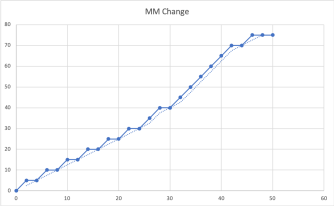
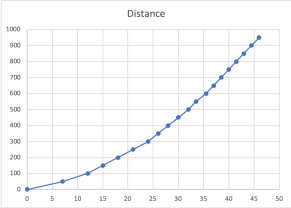
Recently in Physics, we did drop tests with various objects to learn about gravity and acceleration. By counting how far the object traveled every set amount of time, we could plot a graph for the velocity of the object, and then we could create an additional graph to study the acceleration of the object. Here is what some of my first graphs looked like:

Graph 1Graph 2

The graph on the left shows the distance from the starting point of the object, plotted at every 50mm interval. The second graph is similar, but a point is plotted every 2 frames, instead of a specified distance. This makes it easier to graph acceleration. It was difficult to achieve an interval that was small enough to get smooth data and also maintain a high level of accuracy, which is why the second graph looks choppy. The dotted line on the second graph is a changing average trend line to show a more approximate graph of the movement of the object.

During the experiment, me and my partner learned how important it is to plan ahead. In our case, we struggled to see the increments on the meter stick we were using in the video of the drop test. What we could have done was make our own ruler with our set increment in a bright color, for example.

For anyone that doesn’t know much about gravity, here’s a quick overview: gravitational fields are created by any object with mass. Yes, people, and everything else that it on earth, has its own gravitational field. When you get something with a lot of mass, like Earth, you have really strong gravitational fields causing other objects to be attracted towards that object at a rate dependent on the mass of the object. Earth has a gravity of -9.8m/2^2, which means everything is attracted towards earth at 9.8 meters per second squared. A planet like mars has a gravity of -3.7m/2^2.

Learning gravity and acceleration by actually doing experiments involving them made it much easier to grasp the topic, and gave us real world data to work with.


Thanks for checking in,

-Graham

Presentation of Learning

Hello,

In this blog post I’ll be talking about my Presentation of Learning (PoL). In Innovation Lab at the end of the year, all students are required to do an oral and written presentation to show how the student improved throughout the year in terms of the Vision of the Graduate, which is a set of standards that all Greenwich Public Schools students strive to achieve. The oral presentation consisted of roughly 5 minutes of talking about achievements and improvement this year, followed by 5 minutes of questions by the teachers. I thought that the PoL was beneficial to review my good and bad experiences of the year, how I have improved, and what I still need to work on.


Here is a portion of my written PoL:


I have improved through the capacities of the Vision of the Graduate throughout my Sophomore year. With a total of 12 capacities to choose from, it was difficult to evaluate which capacity I had improved most in. After lots of revision, I chose the following four capacities: my response to failure and success with reflection and resilience, my critical interpretation, evaluation, and synthesis of information, my collaboration with others to produce a unified work or heightened understanding, and my personal conduction of an ethical and responsible manner. I will start with my response to failure and success with reflection and resilience.

During the first quarter of the year, I found STEM quite easy, almost elementary. I underestimated the workload of Inlab. With Inlab’s long term, hands-on project philosophy, it was easy to slack off at the beginning of the year, and very hard to catch back up with the work. About a month before Christmas break, I found myself buried in a hole of work, feeling overwhelmed and hopeless. Fortunately, the teachers of Inlab were very supportive and helped me catch up. Needless to say, I wouldn’t make that mistake again. I used this lesson of spacing out work throughout the rest of the year. As a very argumentative person, I generally do things differently, and as a result, I learn a lot of valuable lessons ‘the hard way’, meaning that I try to cut corners on projects, and then end up learning that I shouldn’t have. My favorite example of this is my 8th grade science fair, when I built an electrolysis oxyhydrogen generator, which almost killed me. The only thing that prevented the ¼ inch thick plastic generator from becoming a pipe bomb in my driveway with me standing right next to it, was a small safety mechanism called a bubbler, which bubbles the gas in a way that if it blows up, it doesn’t also ignite the main generator. This fun yet almost deadly experiment taught me to wear safety equipment, something that I generally disregarded before the mishap. Instead of following common directions, I decided to try doing things my way, which ended up almost injuring me.

My third capacity, which is my collaboration with others to produce a unified work or heightened understanding, was measured by how much better I was at working in groups towards the end of the year versus the beginning. Sometime during the beginning of the year, we were surveyed as a class to find out if we prefered working in groups or individually. I immediately voted that I greatly prefer to work alone, since as a control freak, I work better when I have all the responsibility. It is also superior since it makes the finished work more uniform and fluid. I can go on for hours about reasons why working individually is superior, but there is one compelling reason to me that argues that working in groups is more beneficial. This reason is that later in life, there will be many times that I will have to collaborate with others, not only to produce a unified work or heightened understanding, but to have money to put a roof over my head and feed myself. The chance to be able to practice working in groups has challenged me to go outside of the my comfort zone and make myself work in groups, so that I could prepare myself for a possible future career. By challenging myself to work in groups this year, I have improved a tremendous amount in my inclination to work with someone else, and also learning how to split the work and make sure that it still turns out well.


This is my last blog post of the year! See you all in the fall!

-Graham

Children’s Book Project

Hello!

It’s almost finals week, and the end of school is so close that we can almost touch it.

For my second to last blog post, I want to talk about my experience going to Julian Curtis Elementary School to gather information about what kinds of books children like, then going back to school and working to create our very own children’s book. After toiling over the book for weeks, we finally turned in a book that my group was proud of. After sending the books away to get printed, we went back to the elementary school to read our children’s books to the kids. It was really fun.

IMG-8714

Our book was about an alley cat that got bullied by a rich cat. The rich cat would do stuff like pour mud on the alley cat and call him names. After exposing the rich cat, since his grandfather was an alley cat, they became friends.

The kids really liked all of our books, and we also learned a lot about writing. For instance, we had to include various lessons in our book, such as different types of sentence structure.

For anyone that is interested, I will attach the full PDF version of our book to this post – I invite everyone to read it.

Children’s Book PDF

Have a nice day!

-Graham

Horticulture Room

Hello all,


Today I wanted to talk about my experience working to clean and revamp our school’s horticulture room.

\\

We have been working for the past few months to restore and breathe new life into the room, growing our own plants using grow towers and conventional potting. The first few weeks was spent taking out old trash and cleaning the room in general. After that, we ordered some grow towers to experiment with, which took another few weeks to assemble. After that, we started the slow process of seeding and growing. The grow towers are almost completely self sufficient; we need to add more water every now and then but in general they take care of themselves. Our other plants get watered every couple of days. We have also been experimenting with different types of fertilizers.

\\

IMG_8229.jpg

\\

In my group’s tower, we planted rainbow chard and some different types of lettuce. We also used some vegetable specific fertilizer and mineral blend to help nourish the plants. The first couple weeks of using the grow tower was quite slow – the plants were not really growing and we didn’t know why. So we started trying to change different variables to help them grow. We started by using a different pump flow rate, and then we changed our pH, and then we added some more fertilizer, and changed our watering schedule. The combination of all of these things vastly improved the grow rate and now our plants are taking off. We are now working on an outdoor planter setup, building framework and starting to move some plants outside.

\\

It has been a great experience of renovating the horticulture room and learning the various steps on good plant growth.


See you next time!

-Graham


Antivax Editorial

Hello! I hope everyone is well,

For our most recent Design Studio project, we were required to find and research a topic of our choosing and write a ≤ 450 word editorial about that topic. I chose to do my editorial on the recent outbreak of measles in multiple states due to people willingly rejecting vaccinations. Antivax supporters believe that vaccines cause life long issues, which is simply not true. For instance, one might say that vaccines are bad due to the fact that they contain asbestos, which shows that they clearly haven’t done any research, since a simple internet search will show that the amount of asbestos in vaccines is less than a fraction of the amount of asbestos naturally produced by the body.

And now measles, which was mostly irradiated, is coming back in great numbers, which results in a huge amount of money being spent on controlling the disease spread.


Here is my editorial


Antivax – A Fatal Flaw

By Graham Ornstein


Most diseases are completely preventable, and some had even been eradicated completely from the United States, but many are now returning. Antivax supporters argue that vaccines cause lifelong issues, such as autism, which is just not true. Antivax supporters and unvaccinated people not only potentially harm themselves, they put others at risk by harboring, and spreading diseases. It should be illegal to knowingly put yourself and others at risk by claiming false information is true. Private companies, like Facebook, Twitter, Pinterest, Google, Instagram, and most other social media outlet, have the right to block whatever they want from their platform. Some say that would violate their First Amendment right; but when the company is private, they can moderate any speech they want. While these outlets should not block content solely based on bias, they should certainly block factually incorrect and harmful content. I believe that telling someone else that vaccines are deadly and cause autism, which has been proven false, fall under the guidelines of hate speech, since it promotes and advocates for violence by encouraging parents to deny their children access to vaccinations that could be life saving.


A common argument made by antivax supporters is “if I’m not vaccinated and you are, then I’m only hurting myself.” The New York Times has replied to a similar argument, stating, “An unvaccinated child can get the virus and spread it to those who can’t protect themselves.” People with compromised immune systems cannot receive all vaccines, because they would risk contracting the virus in the vaccine. Those people don’t get the option of whether or not to get vaccinated, which is why it is everyone’s responsibility who can get vaccinated to do so in order to protect those who can’t. Bill Gates, founder of Microsoft and the Bill and Melinda Gates Foundation which has helped provide third world countries with vaccines, voiced his concern about the anti-vaccine movement in a Reddit Ask Me Anything interview. He said, “it is surprising to see how in the richer countries the consensus that kids should be protected has been lost,” adding that, “vaccines have saved more lives than any other tool.” Mr. Gates talked about how when he provides low income countries with vaccines, people walk for miles through the scorching heat to receive a shot, yet in the United States, people are willfully ignorant regarding the fact that vaccines average a success rate of around 80-85 percent. Perhaps other states should add restrictions, like Washington State did recently, regulating where unvaccinated people can go, in order to reduce the risk of more outbreaks.


Music and Memory – A Perfect Match

✍︎ Hello! I hope everyone is well.. Today I wanted to talk about how important music is.

Music can be extraordinarily beneficial to numerous functions of life, and it aids in the development of different parts of the brain. Music helps improve memory, endurance, reduces stress, improves sleep, increases happiness, just to name a few. For me, music is a way to escape; if I feel distracted, energetic, bored, sad, angry — there is always a song or playlist that will let me get away. There are thousands of scientific studies about the long and short-term effects of listening to music. Here is one that talks about the different effects of various types of music on the brain: https://www.ncbi.nlm.nih.gov/pmc/articles/PMC5096663/


That article talks about two different kinds of music – artistic music and popular music.  Here are functional MRI (Magnetic Resonance Imaging) scans from the study

pone.0165377.g001.jpg

This shows that group B (Artistic Music) is more effective for stimulating the brain than group A (Popular Music). The article then goes on to talk about what parts of the brain are stimulated in each. If you want to learn more about this, I suggest you check out the article; it’s pretty technical but isn’t too hard to understand.


So, if you’re interested in expanding your ability to memorize, improve your sleep, and let go of stresses – I highly suggest music as a way to relax. Preferably music without lyrics or light lyrics; music with lots of lyrics such as rap don’t help with focus. If you want to learn more about how music without lyrics helps focus, check out my friend Ben Pipher’s blog on that topic: Ben’s Blog

As a side note, Spotify, which is tremendously better than Apple Music, does something called Spotify Wrapped every year (If you have premium), which allows you to see statistics about your use of Spotify throughout the year. It also will show a personalized top 100 of songs from that year, along with Spotify’s (Machine Learning) prediction of what songs you will be listening to next year. The top 100 is nice too, since often I find myself finding songs that I used to listen to, so it is good to have a playlist of old favorites. I listen to an extreme amount of music, and I like to know all the stats about my listening, not for any particular reason, I just find statistics in general very interesting. For example, I listened to approximately 62,020 minutes of Spotify in 2018, which amounts of 11.8% of the year or 1,033 hours.

Thanks for reading, I hope you enjoyed. Be sure to check back next time!

⏦Graham

Learning with the Vision of the Graduate

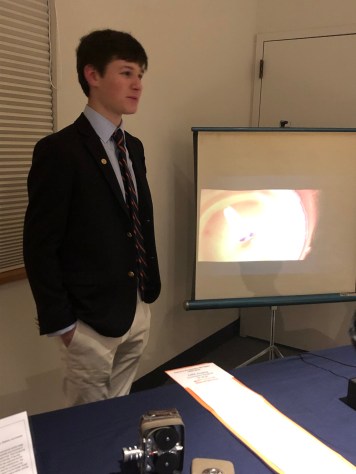
Hello! I’d like to talk about our recent Bruce Museum exhibition and the things that I learned along the way. We studied the 1920s, and found a topic that was interesting to us, and then researched the topic and came up with a paradigm shift that helped influence today. For me, that was film in the 1920s, and more specifically Kodak’s influence on the photography market. Kodak made it possible for a substantial number of people to be able to capture family memories, and more importantly, allowed almost everyone to be able to afford a camera by lowering the price of the consumer camera.


The Vision of the Graduate is a set of critical requirements that each student should achieve. A capacity I feel I have achieved a lot this year, and specifically during our Bruce Museum project is, “Response to failures and successes with reflection and resilience” (Vision of the Graduate) .This is because I had to drastically change the final product half way through our project. Originally, I planned to film my presentation portion on a Super 8mm camera, and have it developed so that I could project it on an old film projector. However, I ran into multiple issues, including time to develop, types of super 8, and the camera that I was using. In the end, I filmed the video on a digital camera and made half of the video look old. I then had the video transition to a modern digital look, and then I showcased personal family photos to show how Kodak has influenced my family.

IMG_3406.jpeg

I think that this is a great response to failure, since even with a quickly-approaching deadline, I was able to pivot my project and still create a great presentation. While I think the original idea for the project would have looked great, there were too many roadblocks to make it work. Next time, I would definitely do more research before jumping in and starting to work, so that I know what roadblocks I might run into and how I might be able to address them. Another capacity that I feel that I exceeded in for our project is, “Pursue their unique interests, passions and curiosities.” As a photographer and videographer, I was inclined to choose Kodak as my topic, so that I could learn about the heritage of my hobby and hopefully future profession, as in how photography and videography came to the mainstream. I find it very interesting to know what had to happen to allow me to do what I love, which is capture moments that are important and beautiful to me, and be able to save and show them.


Thanks for reading, hopefully you enjoyed learning about how the vision of the graduate shapes our learning!

-Graham